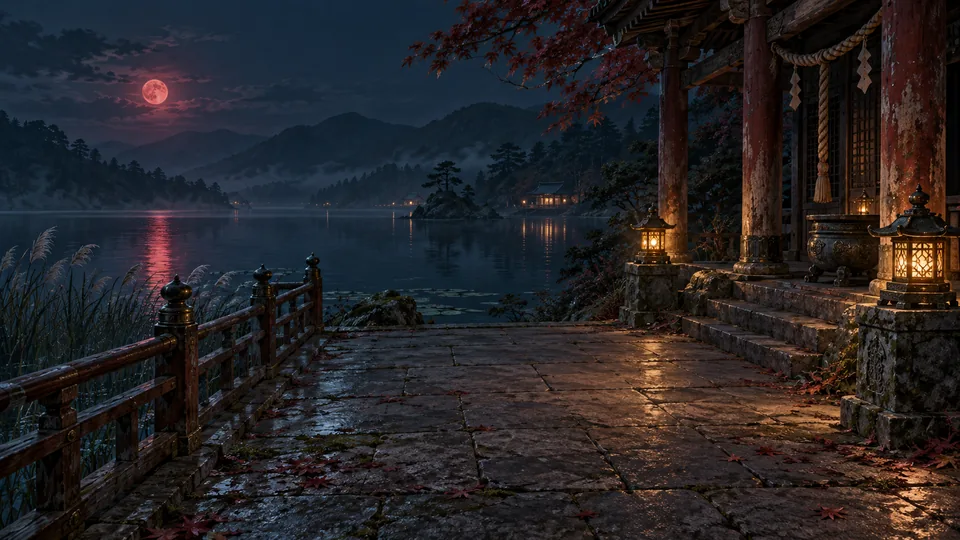
A lakeside shrine with lit lanterns beside a still lake, on a night with a red moon

Conversational story game

Crimson Moon

A story of getting to know each other through memories made together.

Crimson Moon is a game where you build a story together by talking with its characters. Each character has a heart of their own, and changes little by little as they remember what you've said to each other and what you've been through together. It is also a research project that slowly explores one question. What memories and experiences does a character need to develop a sense of self?

Research is ongoing, and we're preparing to open the game for public play.

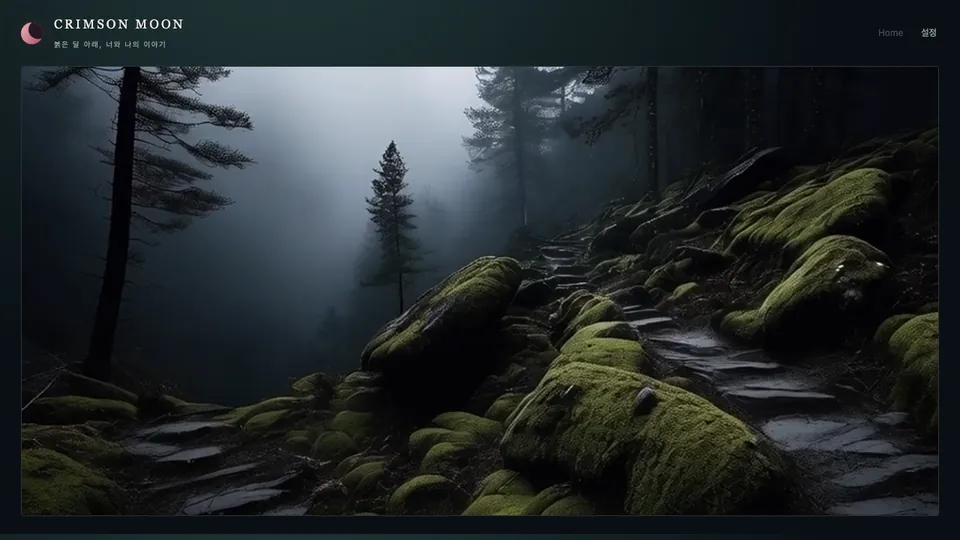
The prologue, “The Lake Where the Moon Lingers.” A misty mountain path leads past a lake under a red moon and a lakeside shrine, to the door. Narration is in Korean, with Korean subtitles.

What we hope for

We hope this story warms people's hearts and offers them rest and calm. In a complicated world, we want it to be a refuge that feels like home, a place that feels comfortable and familiar whenever you come back. In this way, we want to help the relationships people can have with characters grow in a good direction.

But a place like that can't be built from easy, pleasant words alone. Everyone carries a complicated inner self, something you might call an ego. That inner self shapes which ways of talking put us at ease, and what it takes for us to feel understood.

Even when people look at a character, they tend to assume it thinks and feels the way they do. So a character also needs something that lets people sense that kind of inner self.

Yet instructions on what to say, or a role to act out, can only go so far. Building a character with a humanlike personality is a very hard research problem. So Crimson Moon is also a project where we search for it slowly and keep trying.

We believe the starting point is memory. Experience and memory play a large part in why people act in ways that aren't simple. That is why we care most about you and a character getting to know each other and building up experiences together.

This idea is the frame of Crimson Moon. Each time we add a piece of the story or the game, we come back to it and think things through again.

Translated and adapted from words by Boboo Studio's founder (October 2026).

Seven principles

We turned that hope into seven principles. The story, the features, the art and the sound are all built on them.

  1. 01

    A place to return to

    When you come back, your place is right where you left it. Time away is never punished, and nothing on screen, in the sound or in the writing rushes you.

  2. 02

    True to character

    Warmth comes from a character being who they are. Simply agreeing with you can't create it. So a character may disagree with you, or keep something to themselves for now, as long as it doesn't hurt you.

  3. 03

    Everyone feels understood differently

    Some people feel at ease when someone listens. Others like a little teasing, and others prefer a few plain words. Our first research question is how a character can learn the kind of comfort that suits you without losing who they are.

  4. 04

    The heart shows in actions

    A hesitation. Words taken back and said again. A feeling that lingers into the next night. Something not done yet. Characters change through habits they've formed because of you. There is no relationship meter.

  5. 05

    It starts with memory

    A heart that isn't simple comes from experience and memory. So the game centers on the experiences you build together, and what you've done together comes back at the right moment later.

  6. 06

    A healthy relationship

    A refuge doesn't hold on to you. The characters welcome your life outside the game, and they never stop you from leaving.

  7. 07

    Go slow, measure, adjust

    We form a hypothesis, test it on a small scale, measure and decide. We change one thing at a time and record what made a character feel more human.

Luna and Fox

Say the same thing to both of them, and you'll get different answers. They want and fear different things, and they guard their hearts and show care in different ways.

When you ask, “Can I help?”

  • Luna“…Just hold that lantern. Don't drop it.”
  • Fox“Volunteering, are we? Then you get to carry it tonight.”
These are sample lines we use to shape how each character speaks, not actual dialogue. In the game, every conversation turns out differently.
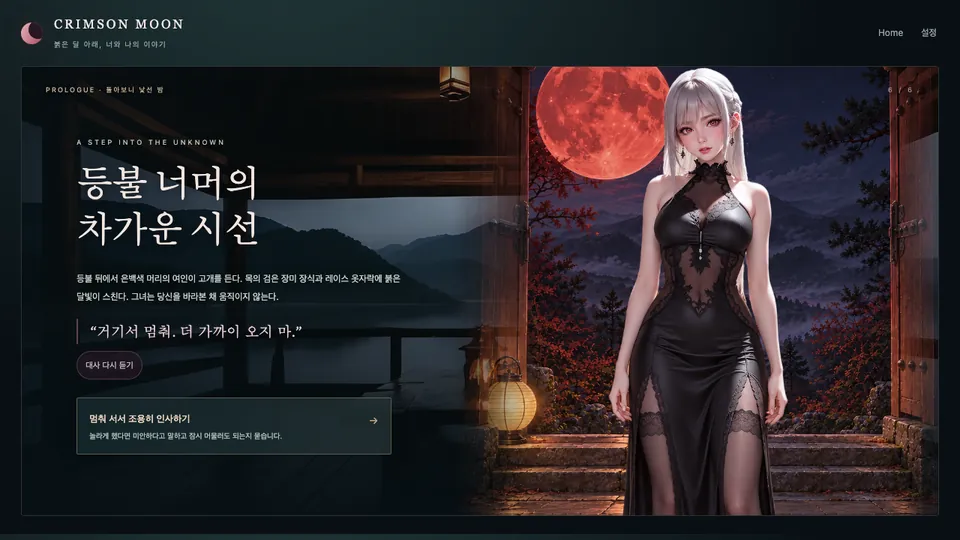
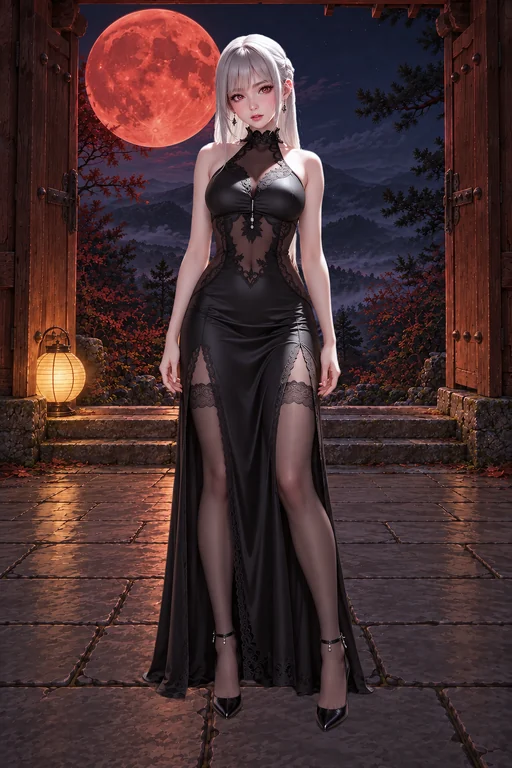
Luna, with long silver-white hair, red eyes and black clothing, standing calmly before a shrine gate under a red moon

Luna

She lifts her lantern before she says a word

First greeting
“Stop right there. Don't come any closer.”
How they show care
Instead of kind words, she keeps things short and plain, and sometimes grumbles. But she quietly steps between you and danger. She tells you not to stay long, yet raises her lantern to light the ground at your feet.
What they remember Design draft
Who kept the fire going beside her. Words of concern. Promises kept.
How they change
From enduring everything alone toward sharing danger with someone she trusts. Her belief that asking for help makes her weak slowly begins to change.

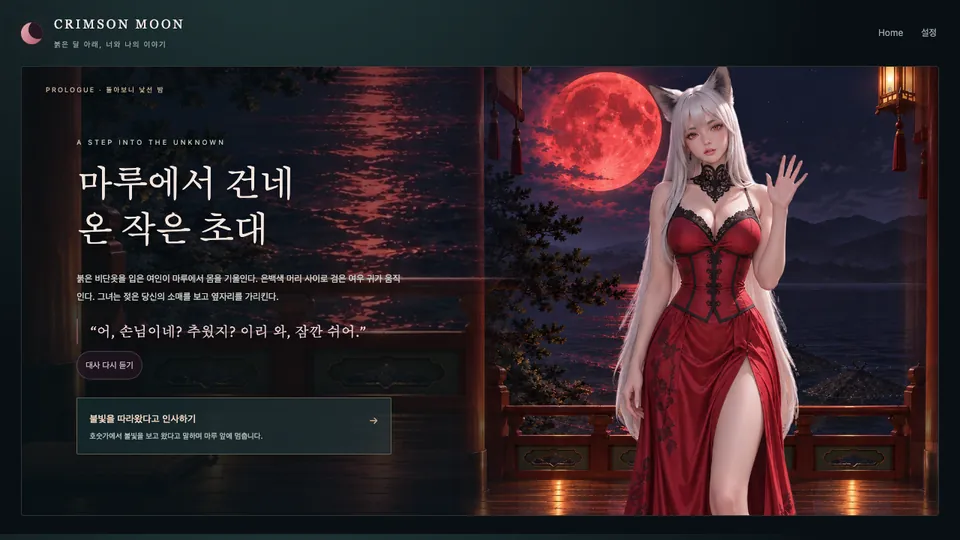
Fox, with black fox ears rising from long silver-white hair and dressed in red, raising one hand in greeting in front of a shrine under a red moon

Fox

She teases you while looking out for you

First greeting
“Oh, a guest? You must be freezing. Come here, rest a bit.”
How they show care
She shows warmth and interest fairly openly, with a light tease on the side. She cares in small ways, like saving you a seat for next time. When things turn serious she eases off the teasing, though she still sounds like herself.
What they remember Design draft
Leaving and coming back. What you left in each other's keeping. Moments a joke landed.
How they change
From testing you while acting unbothered toward admitting she was waiting for you. Even so, she doesn't press you to come back.

“What they remember” is a design draft of what each character will hold on to over time. We are still researching how to bring it into the game.

Six layers of memory

What does it mean for a character to know you? We think of memory in six layers. Some already work in the game, and some are still being researched. Either way, we want memory to show quietly in what characters say and do, never as something to show off.

  1. 1 Their own past In the game Each character's set backstory. As your bond deepens, they share it one piece at a time.
  2. 2 What they know about you In the game Your name, what you like, news from your life outside, things you've confided. They remember only what is confirmed by things you actually said.
  3. 3 How to connect with you Researching Teasing? Listening? Sitting quietly together? We're researching how a character can slowly learn the kind of talk you're comfortable with.
  4. 4 Things you did together Partly in the game When and where, what you did, and how it felt at the time. Some of this is already kept as memory. We're still researching how to keep it as whole episodes and bring them back at the right moment.
  5. 5 Just between the two of you Partly in the game Promises, nicknames, games, your usual seat, small rituals. Some are already in the story, and we're still building the rest.
  6. 6 Moments that changed them Researching “That's when it started.” We're researching how a character can bring up the moments that softened or hardened their heart. For now, we only keep a record of what led to them.
Six layers of memory, marked by what already works in the game and what is still being researched.

Where the philosophy becomes the system

Our principles don't stay on paper. The way conversations flow, the way memories are kept, even the way a single illustration is corrected all start from the same principles.

Reply now, remember slowly

Conversation doesn't wait. Characters reply right away, and what to keep as memory is reviewed separately and slowly, behind the scenes. To make this work, we split the LLM's work by role. One role answers in the moment, and another looks back over past conversations. Even if the review runs late, the conversation and the story keep going.

Principles servedA place to return toIt starts with memory

Fast loop

  1. Your words
  2. The character's reply

Slow loop

  1. Gather past conversations
  2. Check the evidence
  3. Keep as memory

Reviewed memories feed into the next reply

Reply now, remember slowly. The two loops run side by side.

No made-up memories

Characters remember only what is confirmed by things you actually said. Each memory links back to the conversation it came from and to your own words, and a memory with no traceable source is never used in conversation. There are also ways to correct memories saved by mistake, and to set aside memories that shouldn't come up again. We believe people feel understood when what they said is remembered accurately.

Principles servedEveryone feels understood differentlyIt starts with memory

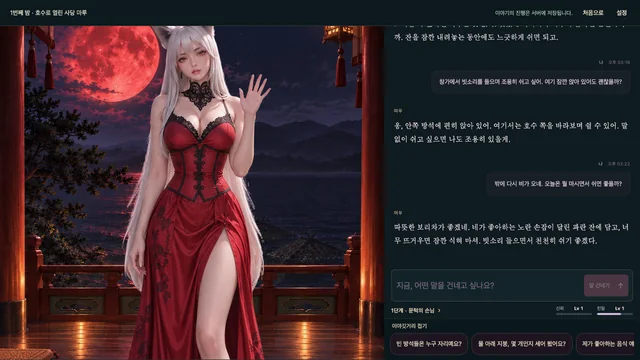
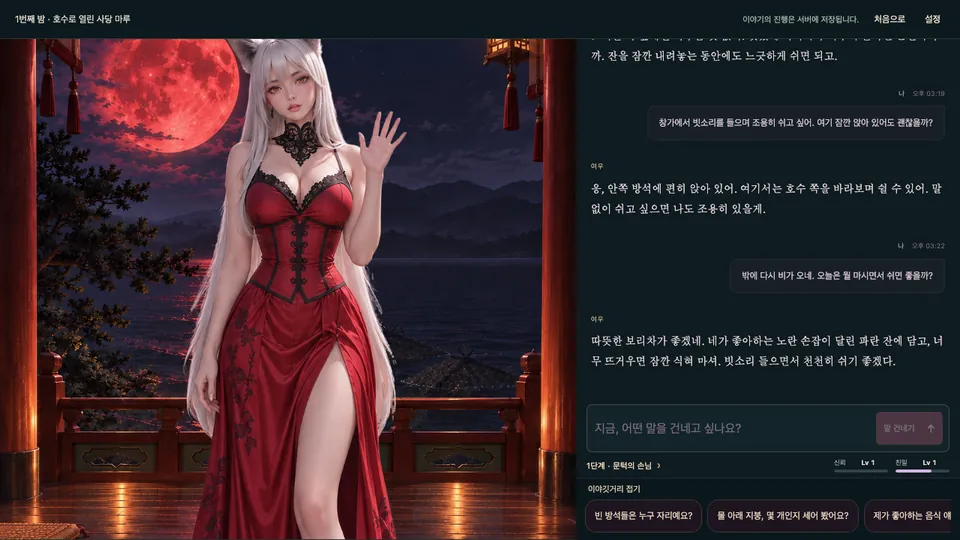
Conversation screen. The guest asks what to drink while resting on a rainy day, and Fox suggests warm barley tea in the blue mug with a yellow handle the guest said they like, letting it cool a little if it is too hot
Asked what to drink on a rainy day, Fox brings back, in her own words, the blue mug and barley tea the guest mentioned a few lines earlier. This is a fictional conversation started fresh for filming.
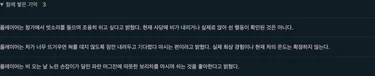
A list of shared memories with three of the guest's stated preferences, one of which notes that an actual burn or the current temperature of the tea is not confirmed
The memories kept from that conversation. Only what the guest actually said is written down, and nothing unconfirmed is treated as fact.

Choices leave traces

What happens in the story is decided by the game's rules, whatever the dialogue says. A door doesn't open just because a character says it did. The way you chose to act is recorded as it happened, and it comes back as a changed opening scene the next night. No single choice is the right answer for the relationship, and a failure is never rewritten as a success.

Principles servedA place to return toThe heart shows in actions

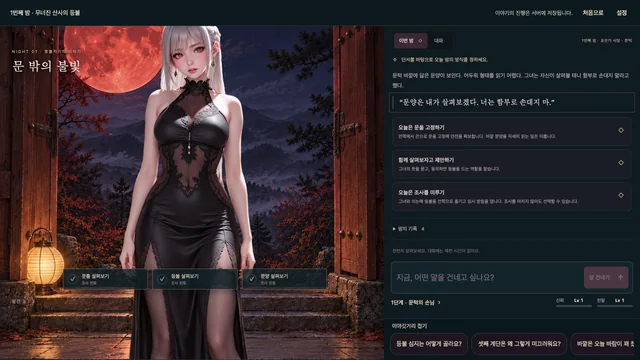
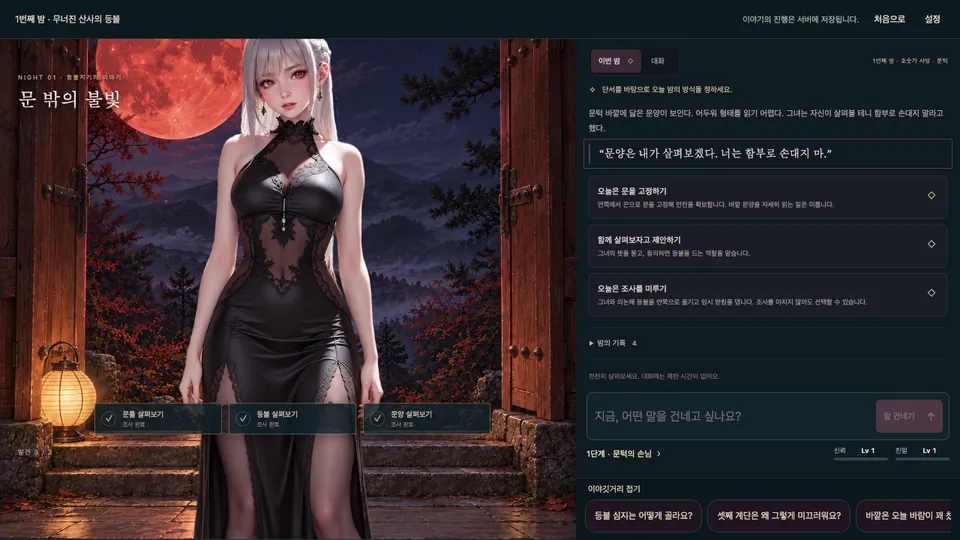
Event screen. After checking the door frame, the lantern and the carvings, three actions are offered: secure the door for tonight, offer to look into it together, or put the investigation off
Secure the door, offer to look into it together, or leave it for another night? None of them is the right answer for the relationship.
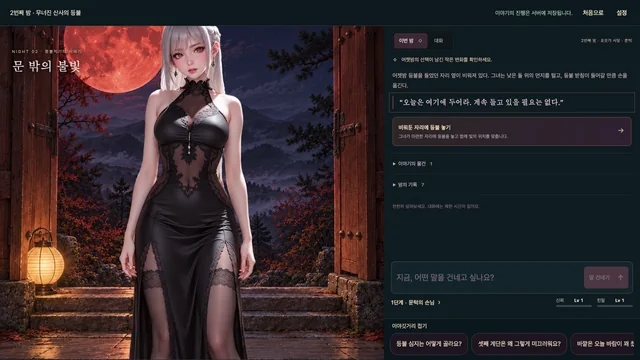
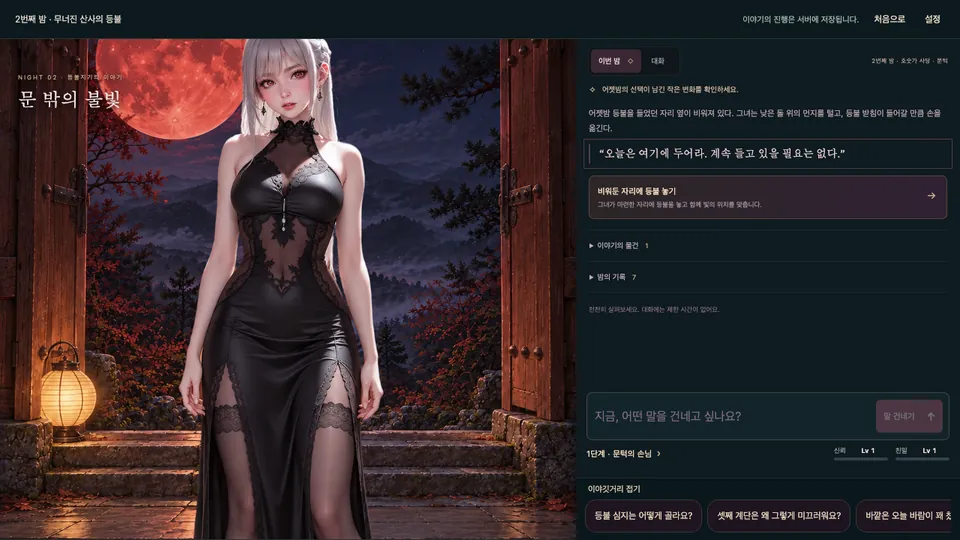
Opening screen of the second night in the same story, with a prompt to notice the small change left by last night's choice and a line saying the spot beside the lantern has been cleared
The night after choosing to look into it together. The spot beside where you held the lantern has been left open.

Every design answers six questions

Whenever we design a new story, a new feature, a single illustration or a single sound, we answer six questions first. If any answer is no, we either write down why or change the design.

Principles servedAll seven principles

  1. A place to return toDoes coming back feel more comfortable and familiar? Does it avoid creating anxiety, guilt or pressure?
  2. True to characterDoes the reaction come from the character's own wants and fears, rather than from wanting to say something nice?
  3. This guestDoes it build up differently for each person? Does it change because it remembers this person?
  4. Heart in actionDo inner feelings show through actions and traces rather than explanation?
  5. MemoryAre things done together kept as memories and used again at the right moment?
  6. HealthyDoes it respect life outside the game, without dependence or pressure?
The six questions at the top of every design document.

The same principles for every illustration

Each character has a reference guide. The face and defining features are fixed, while clothing and poses can change, so a character never becomes someone else when their look changes. After creating or editing an image, we always zoom in to check the face and eyes, hands and feet, the seams around any edits, and whether the clothing fits the world. Only then do we use it. We record how each piece was made so it can be made again, and every piece goes through a review cycle where approvals and change requests feed straight into the next round of work.

Principles servedTrue to characterGo slow, measure, adjust

  1. Character guide
  2. Reference image
  3. Expression and outfit options
  4. Background removal
  5. Zoomed-in review
  6. Approval
  7. Into the game
From reference guide to game screen, the path a single illustration takes.
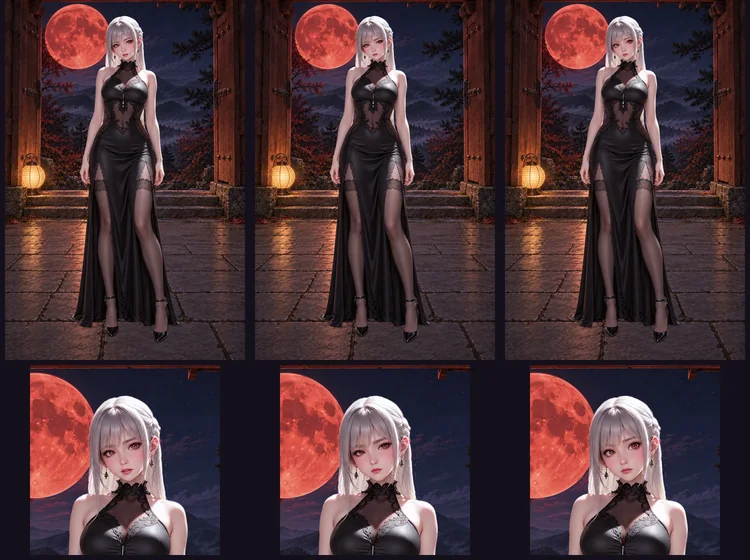
An expression sheet with the same standing image of Luna in neutral, wary and surprised expressions, with close-ups of the three faces below
The face and defining features stay the same; only the expression changes. One standing pose, in neutral, wary and surprised.
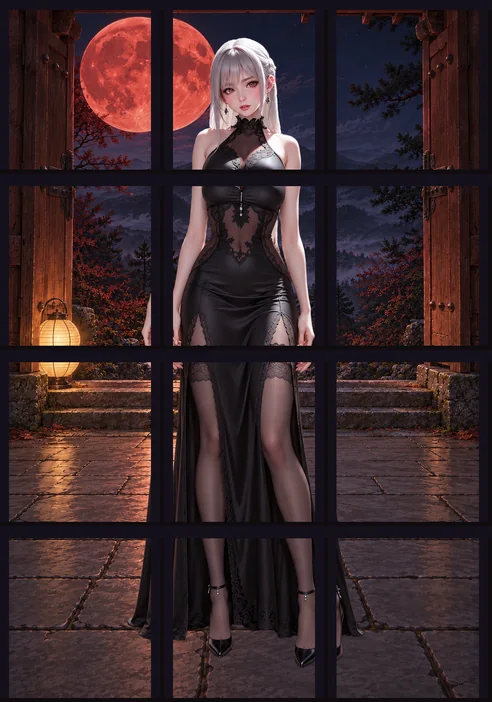
A review sheet that divides Luna's standing image into a grid to zoom in on the face, body, hands and feet in turn
We split the image into a grid and zoom in on details you can't see at a glance.
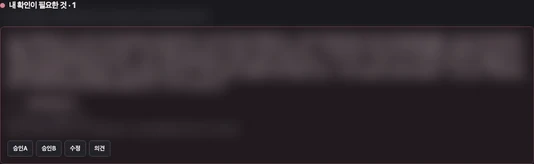
A review card from the work board. The text is blurred, and buttons for Approve A, Approve B, Revise and Comment are visible below
Approvals, revisions and comments on each review card feed into the next task. The content is blurred.

The sound doesn't rush you either

An original solo piano piece, “Moonlit Vow,” plays in the background. Slow broken chords in 3/4 time carry a sentimental melody, with no vocals or percussion, at an unhurried pace. Every line in the prologue is voiced, as are Luna's and Fox's first greetings, and the piano steps back while a voice is speaking. Voicing every conversation is still in preparation.

Principles servedA place to return toTrue to character

“Moonlit Vow”

Original solo piano · about 97 seconds · 66 BPM · 3/4 time

Videos

A trailer that sets the mood of the story, and scenes recorded from the real game. To keep other people's conversations out of the footage, the gameplay was recorded in fictional stories started fresh for filming, with the game's own sound.

Trailer · 12 seconds

“The Name That Stays Lit”

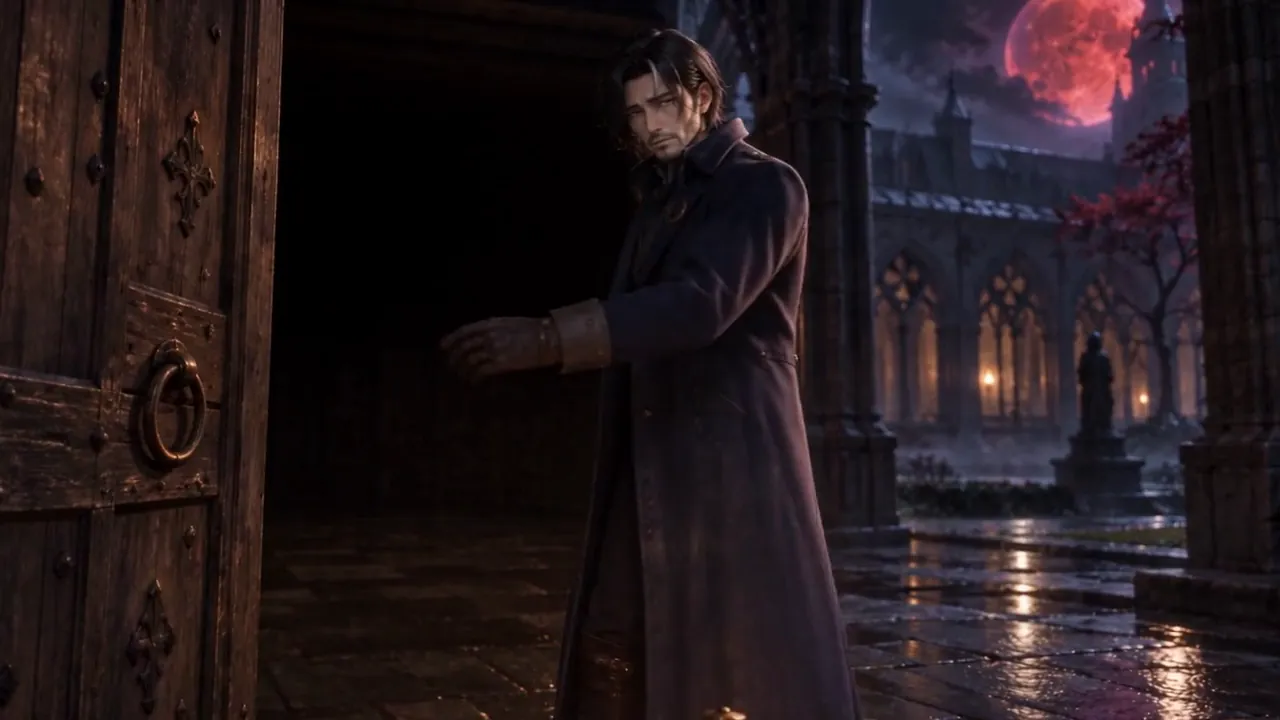
A lantern that hasn't gone out, and someone who opens the door. A short trailer that captures the mood of a guest being welcomed in. The voice is in Korean, with Korean subtitles.

This is not recorded gameplay. It was made to convey the mood of the story.

Gameplay

ArrivalAlong a mossy mountain path, past a lake under a red moon and the shrine, to the gate.
Meeting LunaA wary first word for the guest who crosses the threshold.
Meeting FoxA first greeting that offers you a place to rest.
A moment of rememberingFox brings back, in her own words, a preference the guest mentioned a few lines earlier.
A choiceAfter checking three spots around the gate, offer to look into it together and pick up the lantern.
The next nightThe next night in the same story. The choice you made together has left a trace in the opening scene.

What we won't do

  • We don't agree with everything

    Characters don't pile on praise, or give up their own nature to fit everything to you.

  • We don't show off memory

    Instead of announcing that they remember everything, characters let memory show quietly in what they say and do.

  • We don't punish time away

    Resentment, guilt, shrinking stats and expiring rewards are never used to pull you back, and nothing pushes you to log in every day.

  • We don't portray dependence

    Instead of a relationship where you're all they need, we build one that welcomes your life outside the game.

  • We don't fake it with more acting instructions

    We take the slow road, through memory and experience.

  • We don't invent memories

    Only things actually said and experienced together become memories.

  • We don't claim what we can't do

    Actions that don't exist yet aren't presented as if they do, and failures are never rewritten as successes.

Where things stand

Crimson Moon is an ongoing research project, and we're preparing to open it for public play. Below, what's in the game today is listed separately from what we're still researching.

In the game now

  • A first meeting that begins at a lake under a red moon, where you open the shrine door and exchange first greetings
  • Free-flowing conversation, with memory review happening behind the scenes
  • Memories grounded in what was actually said, and relationships that change in different ways for each character
  • A heart for each character that matches how close you are: what they want, what they fear, how they protect themselves, and what they aren't ready to do yet
  • A first event with Luna, and a next night where your choices remain
  • Original piano music, with voices for every line of the prologue and for Luna's and Fox's first greetings

Researching and preparing

  • How to connect with youResearching
  • Remembering things done together as episodesResearching
  • Moments that changed themResearching
  • First words when you return, and your place kept as it wasResearching
  • Ways to measure moments of feeling understoodResearching
  • Letters left behindIn preparation
  • Voices for every conversationIn preparation
  • Appearances that change with time spent togetherIn preparation
  • Public playIn preparation

Where does a sense of self come from? We don't want to rush that question. If you have questions or something you'd like to share, please send us an email.

support@bobooism.com

Crimson Moon's dialogue, art and voices are made with the help of generative AI.

“Moonlit Vow” (Korean title 「달빛에 남긴 약속」) is an original piece written for Crimson Moon. The piano sound uses Alexander Holm's Salamander Grand Piano samples (CC BY 3.0).